
UIUX Design
Design for People: User Personas in UX/UI


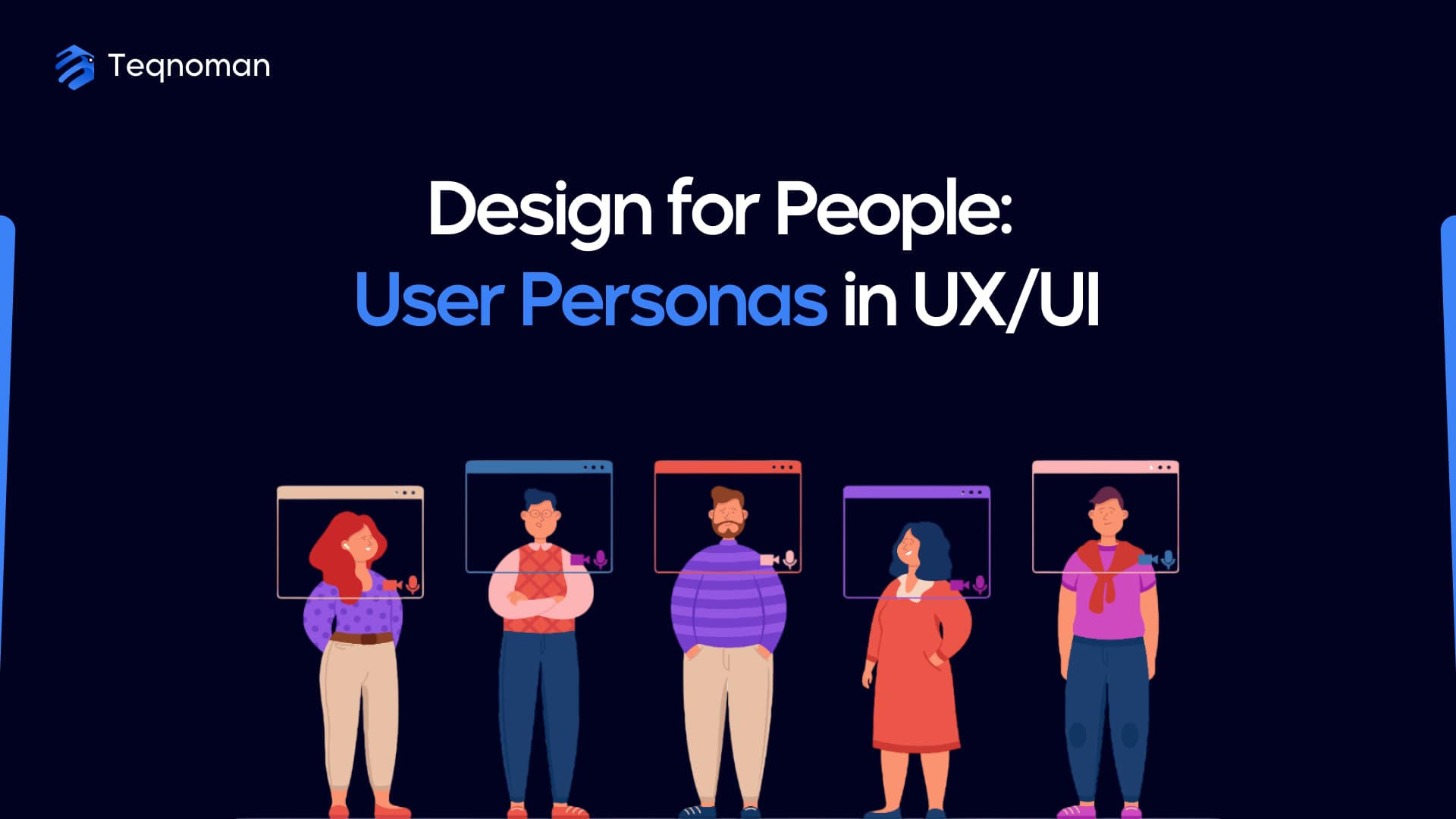
Understand the importance of user personas in UX/UI design and how they help create human-centered digital products that connect with real users.
Creating User Personas to Make Better Design Decisions✨🙌
Creating user personas is probably the most elementary part of design work. The user personas themselves are not fictitious but rather represent actual users with specific needs, behaviors, goals, and pain points.
It becomes easier to make better decisions in designing if one has a sense of who their users are.
Here’s how to create detailed user personas to enhance your design process:
Conduct Thorough Research

Before creating the personas, you should collect as much information as possible on the targeted users. This may include a series of surveys, interviews about user experiences, website analytics, and insights on social media. By using both quantitative and qualitative data, you can thus deeply understand users’ behavior, preferences, and challenges.
Actionable Tips:
- Analyze the site traffic using web tools, such as Google Analytics. 📈
- Conduct actual user interviews: Obtain in-depth insights by conducting one-to-one interviews. 🗣️
- Look at competitor products to see what users like and dislike. 🔍
Identify Key Demographics

Once you have obtained your data, group your users into different categories based on common demographics such as age, gender, location, occupation, level of income, and education, among others. This will ensure you can find out the basic characteristics behind your personas and come out with more realistic profiles since the personas should represent typical user behavior rather than outliers.
Actionable Tips:
- Use user research to segment by job roles, such as developer, designer, or manager. 👨💻
- Technology literacy needs to be included to further configure the personas. 💻
- Keep demographics simple yet effective — avoid too much data. ⚖️
Identify Goals, Needs, and Pain Points 🎯

This means personas have to make their primary goals, needs, and pain points actionable. Ask yourself what each persona wants to achieve and what barriers they are facing. This helps in designing a solution with a focus on directly eliminating user frustrations and making the product more intuitive and effective.
Actionable Tips:
- For a fitness app persona, their goals can be tracking workout routines and reaching fitness milestones. 🏋️♂️
- An unintuitive interface or lack of granular metrics could be the problem. 🚫
- The goals should align with the product’s intention for the persona. 🎯
Include Personal Information for Authenticity 👤

A more human-like persona can make them feel real and relatable. Give your persona a name, age, occupation, and personal backstory. The simple detail of this can help stakeholders visualize the user and make design decisions out of empathy. Personalized personas ensure that design decisions are aligned with users’ emotional needs.
Actionable Tips:
- Include hobbies, interests, or lifestyle features that might influence design decisions. 🎨
- Provide a rich background of the daily life, challenges, and aspirations of your persona. 🌅
- Add a picture or avatar to make this persona even more real. 🖼️
Map User Journey and Behaviour Patterns 🛤️

Refine your personas by understanding the behavior patterns of your users and their journey. See how each will interact with your product from start to finish. This helps pinpoint where issues may arise for the users and optimize the experience further.
Actionable Tips:
- Outline the concrete actions that each persona will take while using your product. 📝
- Identify potential drop-off or frustration points on the user’s journey. 🚶♀️
- Focus on emotions and reactions in the journey to enhance user satisfaction. 💖
Flexible and Iterative Personas 🔄

As you continue to collect feedback and insights, your personas should evolve. Always update them with new data or shifting trends to remain relevant. The more that is learned about users, the more that personas will refine and shape their design decisions.
Actionable Tips:
- Revisit personas periodically as your product grows and as user needs shift. 🔄
- Utilize continuous surveys, user testing, and analytics to refine persona characteristics. 📊
- Personas are fluid rather than rigid, showing realistic changes in the world. 🌍
Introduce Personas into Your Design Process 💡

Finally, once your personas are created, integrate them into every stage of your design process. Share them with your team to ensure that design decisions always prioritize user needs. Refer back to your personas during brainstorming, wireframing, and prototyping to keep user needs front and center.
Actionable Tips:
- Include personas in design documentation and presentations. 📑
- Use personas in ideation sessions for feature development guidance. 💡
- Ask yourself, “How will this design choice affect each persona?” 🤔

Conclusion ⭐️
It is not a one-time activity but rather a continuous process in which personas adapt to user feedback and changes in market trends. Well-crafted personas ensure that your designs are user-centered and in sync with the needs of real users.
Takeaway:
Personas are powerful tools to make wise design decisions. Zooming into user goals, pain points, and behavior helps empathize with the user and, at the same time, creates more targeted and successful designs. 🎯
Similar Blogs
No Similar Blogs Found
No other blogs found in UIUX Design category.

Teqnoman is here to make it happen.